
HorseMood Ingredients List: 8 Checks, One Name at a Time
Most people read the front of a bottle and stop. This page does the opposite. It starts at the ingredients list and checks each name in turn, using only the label and the studies the site names.
HorseMood lists eight ingredients inside one Test Boost Proprietary Blend of 1,200 mg: horny goat weed, tongkat ali, saw palmetto, nettle, wild yam, sarsaparilla, orchic substance and boron amino acid chelate. The label prints them heaviest first and gives no individual amounts. The other ingredients are capsule helpers and the gelatin shell.
- Why read the HorseMood ingredients list before the front?
- What are the 8 checks, one ingredient at a time?
- How much could each ingredient weigh at most?
- What are the other ingredients in HorseMood?
- Who should be careful with this ingredients list?
- Where do these ingredient facts come from?
- Frequently asked questions
- Our view
Why read the HorseMood ingredients list before the front?
The front of the bottle has two words that make a claim. The ingredients list has eight names that you can check. That is a better use of five minutes.
A list also tells you what to ask your pharmacist. A name like saw palmetto or nettle root points to the prostate. A name like orchic substance points to animal tissue. The front tells you none of this.
One rule makes the list work. Under 21 CFR 101.36(c), a proprietary blend prints one total weight and lists its members in descending order of predominance by weight. So the order is meaningful, even though the amounts are not printed.
Key facts
- Eight ingredients share one 1,200 mg blend called Test Boost Proprietary Blend.
- The printed order is heaviest first: horny goat weed, tongkat ali, saw palmetto, nettle, wild yam, sarsaparilla, orchic substance, boron amino acid chelate.
- No individual amount is published. No extract states a standardisation percentage.
- The six plant ingredients each carry a Latin name and a plant part on the label. Orchic substance and boron do not.
- Orchic substance is bovine testicle tissue, and the capsule shell is gelatin. Both are animal-derived.
- Of the eight, only tongkat ali has a positive placebo-controlled trial named in our sources, and that trial used a standardised extract at 200 mg a day.
What are the 8 checks, one ingredient at a time?
Each check gives the label wording, then what a named source says. Where a source is silent, we say so.
1. Horny goat weed extract, leaf
First in the order, so the heaviest. The label says it is there for its icariin. A 2019 human trial in Natural Product Communications gave icariin from 100 mg to 1,680 mg and found blood levels very low or undetectable, nearly all below 1 ng/mL. The problem it points to is absorption, not dose.
2. Tongkat ali powder, root
Second in the order. A 2021 trial in Food & Nutrition Research gave 200 mg a day of a standardised aqueous root extract for twelve weeks to 105 men aged 50 to 70 with baseline testosterone below 300 ng/dL, and total testosterone rose. Note the gap: the label says powder and states no standardisation. Also, 200 mg is 17% of the whole 1,200 mg blend.
3. Saw palmetto extract, fruit
Third. This is a prostate ingredient, not a testosterone one. The National Center for Complementary and Integrative Health reports a 2023 review of 27 studies that found saw palmetto alone gives little or no benefit for benign prostatic hyperplasia symptoms. The label does not say why it is included.
4. Nettle extract, root
Fourth. Memorial Sloan Kettering reports positive clinical results mainly when nettle is combined with other herbs. It also lists possible additive effects with diuretics and blood pressure drugs. That is a question for your pharmacist.
5. Wild yam extract, root
Fifth. It is listed for its diosgenin. Memorial Sloan Kettering states there is no evidence that the human body can convert diosgenin into progesterone, so wild yam should not be described as a hormone precursor.
6. Sarsaparilla, root
Sixth. The label names the species and the plant part, and says it is there for its saponins. No established dose for this use is published in our sources.
7. Orchic substance
Seventh. This is bovine testicle tissue. The reference monograph says there is no good scientific evidence to support this use, and not enough reliable information to know what an appropriate dose might be.
8. Boron amino acid chelate
Last, so the smallest by weight. The NIH Office of Dietary Supplements gives a median total intake of 1.0 to 1.5 mg a day for adults and an upper limit of 20 mg a day. The label prints no boron amount.
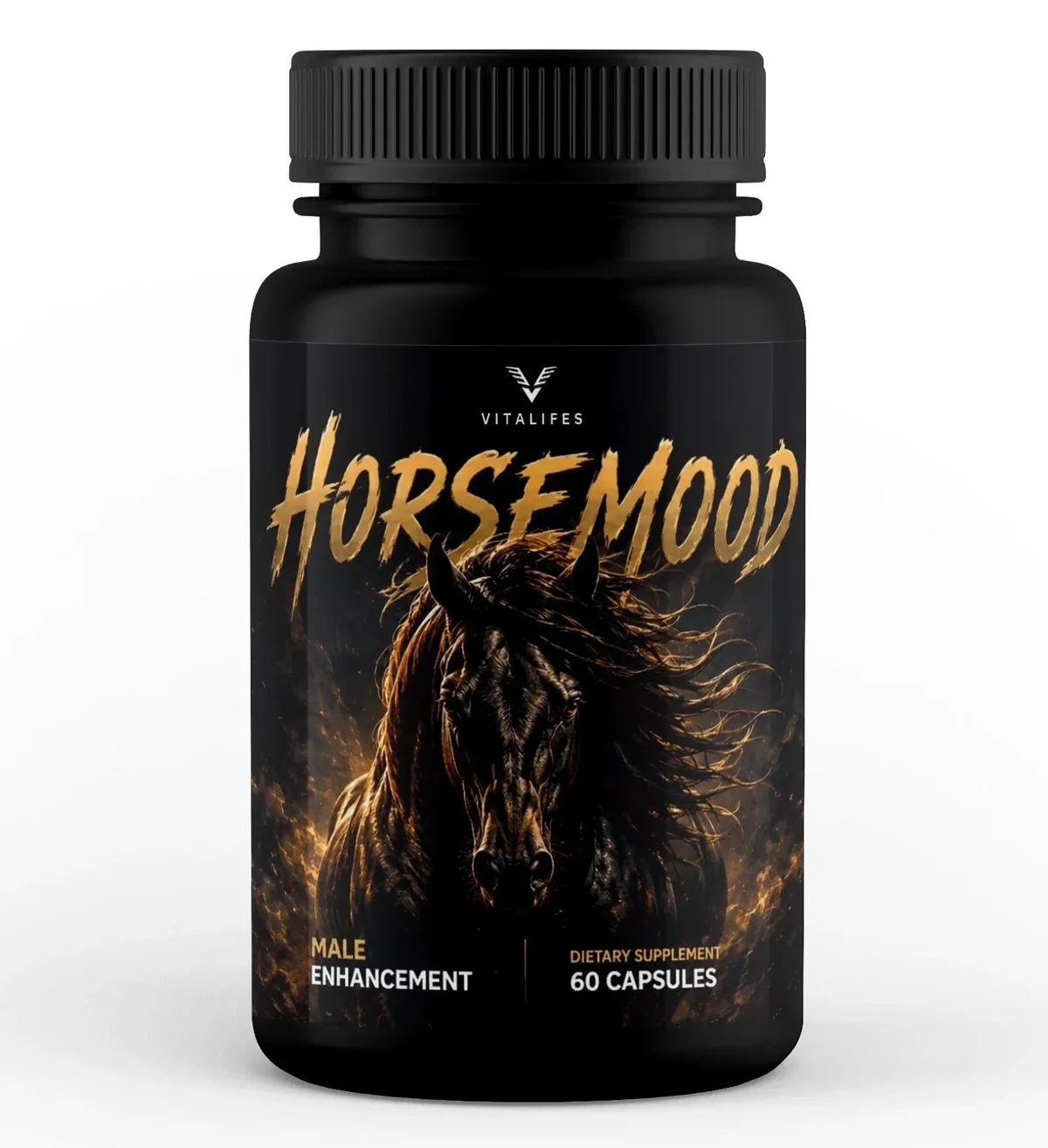
See the bottle behind this list
Each ingredient above is on a bottle you can look at before you decide, and the listing shows the pack price and return terms.
See today’s price and return termsDisclosure: Thehorsemood earns a commission on orders placed through this site.
How much could each ingredient weigh at most?
Because the order runs heaviest to lightest, the ingredient in position n cannot weigh more than the blend total divided by n. This is arithmetic, not a measured amount.
| Position | Ingredient | Most it could weigh | Note |
|---|---|---|---|
| 1 | Horny goat weed | 1,200 mg | Could be nearly the whole blend. Not published. |
| 2 | Tongkat ali | 600 mg | Could clear the 200 mg trial dose. Whether it does is not published. |
| 3 | Saw palmetto | 400 mg | Not published. |
| 4 | Nettle root | 300 mg | Not published. |
| 5 | Wild yam | 240 mg | Not published. |
| 6 | Sarsaparilla | 200 mg | Not published. |
| 7 | Orchic substance | 171 mg | Rounded down from 171.4. Not published. |
| 8 | Boron amino acid chelate | 150 mg | Last place, so at most one eighth of the blend. |
If the blend were split evenly, each ingredient would be 150 mg. Nothing on the label says it is split evenly. Treat every figure in this table as a ceiling, never as an amount in your capsule.
What are the other ingredients in HorseMood?
Below the blend, the panel prints an other-ingredients line: calcium carbonate, microcrystalline cellulose, sodium starch glycolate, stearic acid, magnesium stearate, silicon dioxide and gelatin capsule.
Most of these are ordinary capsule helpers. They fill, loosen, lubricate or keep powder flowing. They are not listed as active. The one that matters to many readers is the last. Gelatin comes from animals, so the capsule is not vegetarian or vegan.
Put that next to orchic substance, and the bottle holds two animal-derived parts. Neither is flagged on the front of the bottle. If that matters to you for dietary, religious or personal reasons, you now know before you buy.
Who should be careful with this ingredients list?
Before using this or any dietary supplement, the caution panel tells three groups to consult a physician: pregnant or nursing mothers, children under 18 and individuals with a known medical condition. Three further groups should read the list with a pharmacist.
- Anyone taking medicine for the prostate. Saw palmetto and nettle root both point to the prostate.
- Anyone taking diuretics or blood pressure medicine. Memorial Sloan Kettering notes possible additive effects with nettle.
- Anyone taking medicines processed by CYP450 enzymes. Memorial Sloan Kettering notes that animal studies suggest nettle may increase side effects.
Because no amount is printed, nobody can check any ingredient against a published upper limit. That is the plain reason to show the panel to a pharmacist before the first capsule. The FDA has not approved it, as it approves no supplement, and nothing in the capsule is a treatment for a medical condition.
Where do these ingredient facts come from?
These are the sources named in the site's own research notes for this page.
- U.S. Code of Federal Regulations, 21 CFR 101.36(c), on blend labeling. Open source
- Chinnappan SM et al., Food & Nutrition Research, 2021;65, tongkat ali trial. Open source
- Brown ES et al., Natural Product Communications, 2019;14(6), icariin trial. Open source
- NCCIH, Saw palmetto: what you need to know. Open source
- Memorial Sloan Kettering, About Herbs: Nettle. Open source
- Memorial Sloan Kettering, About Herbs: Wild Yam. Open source
- WebMD / Natural Medicines monograph, Orchic extract. Open source
- NIH Office of Dietary Supplements, Boron fact sheet for health professionals. Open source
Frequently asked questions
What are the ingredients in HorseMood?
Eight ingredients sit inside one 1,200 mg Test Boost Proprietary Blend, in this printed order: horny goat weed, tongkat ali, saw palmetto, nettle, wild yam, sarsaparilla, orchic substance and boron amino acid chelate. Besides the blend, the capsule holds calcium carbonate, microcrystalline cellulose, sodium starch glycolate, stearic acid, magnesium stearate, silicon dioxide and the gelatin capsule.
How much of each ingredient is in HorseMood?
Not published. The label prints only the 1,200 mg blend total for a 2-capsule serving. The printed order gives an upper limit for each name, but no actual amount.
Is there a standardisation percentage for any extract?
No. No extract on the label states what it is standardised to, so even the named compounds cannot be put into milligrams.
What is orchic substance?
It is bovine testicle tissue. The reference monograph says there is no good scientific evidence to support this use, and that there is not enough reliable information to know what an appropriate dose might be.
Does wild yam turn into a hormone in the body?
Memorial Sloan Kettering says there is no evidence that people can turn diosgenin into progesterone. So we do not describe wild yam as a hormone precursor.
Is HorseMood vegetarian or vegan?
No. The capsule shell is gelatin, and orchic substance is bovine tissue. Both are animal-derived.
Our view
The ingredients list is the most honest part of this product, and also its biggest limit. It is honest because every botanical gets a plant part and most get a species name. It is limited because the list stops at names.
Only one name, tongkat ali, comes with a positive placebo-controlled trial in our sources, and the label does not say whether the capsule holds anything like the trial's amount or kind of extract. Two names point to the prostate. Two have little or no support for the use implied. One is bovine tissue with no good evidence behind its use.
So we would call this a familiar, broad blend that you cannot check. If you are fine with that, and a doctor or pharmacist is fine with it for you, it is a reasonable daily capsule. If you want one named ingredient at a stated dose, look for a label that prints it.
Next step, when you want it
If the list suits you, the order page is the next step, and the price and return terms show there before you pay.
See today’s price and return termsDisclosure: Thehorsemood earns a commission on orders placed through this site.
Last updated